A Real-Life Drogue December 9, 2025 / Ari Magnusson
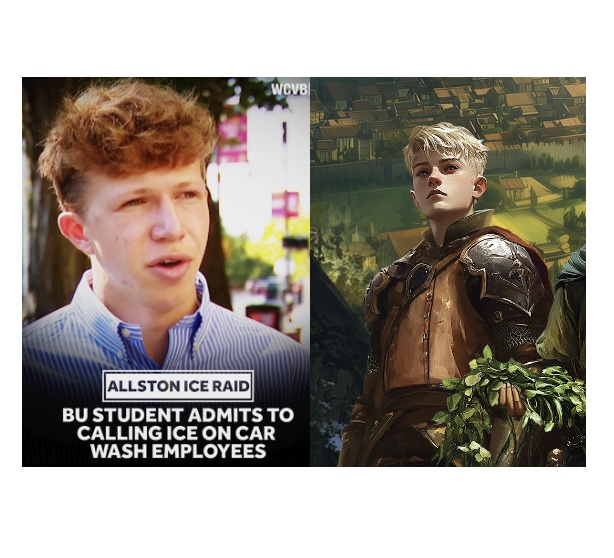
The young man on the left is a student at a local university. He’s an immigrant from Britain and comes from a wealthy family. He attended an elite private school in England before coming to the U.S. for his university education. He’s also the president of the university’s College Republicans. (I’m not naming the young man because who he is isn’t important to the point of this post.)
This young man gained notoriety for repeatedly calling ICE on workers at a local car wash. These workers—men and women—supported their families by working long hours outdoors for relatively low pay. The student had no idea what their legal status was but made it his mission to bring them to ICE’s attention. After months of calling, ICE detained the workers. During the raid, the workers were not permitted to retrieve documentation from their onsite lockers that could have proven they were legally allowed to work in the U.S. They were taken into custody.
The harm he caused was significant. The detained workers had to hire attorneys who are now trying to free them from detention. Their families are enduring both emotional and financial distress. And the car wash owner, a small-business owner, had to shut down—at least temporarily. The end result of all this may be destroyed families and wrongfully deported immigrants.
I’m sharing this because the young man is similar to Drogue, a character in Knights Without Ceremony, pictured on the right. In the book, Drogue is the son of the wealthiest lord in the kingdom. His father is disdainful of the poor and especially of those who were not born in the kingdom.
In Drogue’s character, I wanted to explore the influence a father has on his son and what happens when the son’s desire for approval comes into conflict with his growing discomfort with his father’s ideology. At the beginning of the novel, Drogue sees those not of noble birth as beneath him. But as the story progresses, he begins to understand more clearly who his father truly is. The question becomes whether Drogue will follow in his father’s footsteps or reject his father’s worldview—and what that choice will mean for their relationship.
The posh young man from Britain who called the MAGA military on a group of largely innocent people—people who were simply trying to make a living through a low-wage, miserable job (as the son of a car wash owner who worked at them, I can attest to this)—and then bragged about it on social media certainly didn’t become who he is in isolation. The contempt he displays toward fellow immigrants who are poorer than he is and who have different skin colors and accents could only have been taught by others in his life, such as family and friends, or by social media. I would love to know where he learned this dehumanizing perspective. I would love to hear the his father’s opinion on all this.
The young man who called ICE will likely never work a job as difficult or as low-paying as the ones worked by the people he had detained. He will likely graduate and move on to a cushy six-figure job at a financial firm. His future is both set and golden. The best I can hope for is that one day he wakes up, realizes the harm he caused, and is left with a feeling of inescapable shame. His story is on the internet, so it will always follow him. But better still would be for him to reject the contempt that he learned, push that shame onto its rightful source, and ensure he does not create in his own children or others in his life a legacy of contempt.
Subscribe
To subscribe to the posts, please enter your email address.