What Happened to Books that Help Boys Become Men? June 21, 2026 / Ari Magnusson
As the father of two Gen Z boys, I’ve followed with concern the sociological commentary about the struggles of boys their age, particularly those who are having trouble launching into adulthood and who retain a strong dependence on others. It made me wonder whether middle grade fiction, written for the formative ages of 8–13 (and a category in which I’ve written two novels), could be a contributing factor.
When the 2026 IBPA Book Awards for Middle Grade Fiction were announced, all three winning books, mine included, had boy protagonists. However, when I read the other two books, I noticed a stark difference in how the boy protagonists were treated compared to mine. In Armando and the Amazing Animal Race by Diana Schaffter, Armando completes the race, but only because his friend Jinny, a girl, supplies the research clues. In The Watchwood Inheritance by Ann Huchingson, Peter doesn’t solve the mystery of his inheritance himself. His friend Hadley, a girl, figures it out for him. In both books, the boys are dependent on girls for success.
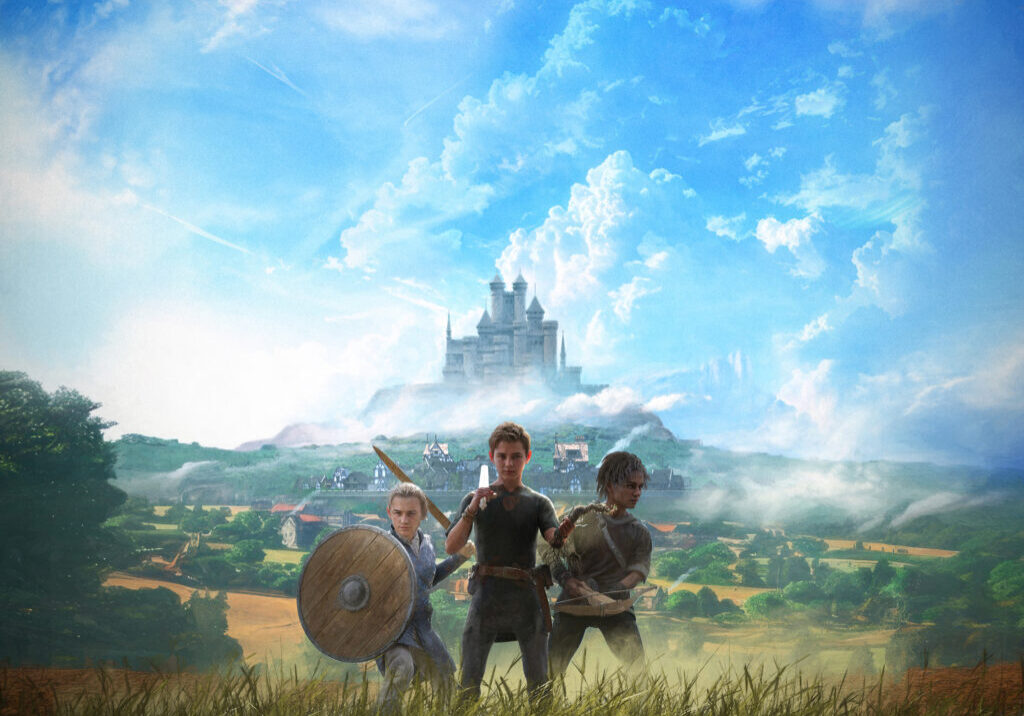
In my book, Knights Without Ceremony, the boy protagonists succeed on their own. They get into quandaries but manage to figure out their own solutions. They see problems in their world and recognize that they have the power to do something about them. That, I think, is what we adults hope for in the boys in our society. If we want self-reliant men, we need to put books in the hands of boys that show them that they can succeed on their own.
When I think about books that I read as a child, the ones that first come to mind are A Wizard of Earthsea, The Hobbit, A Separate Peace, Lord of the Flies, Where the Red Fern Grows, and How to Eat Fried Worms. In these books, boys make their own decisions and, for better and worse, deal with the consequences. Even in Bridge to Terabithia, a book that has a boy and a girl as protagonists, the girl influences the boy, but his growth comes from within himself.
I should note that in middle grade fiction, the trend in recent years is an increasing number of girl protagonists, and those with boy protagonists also tend to have girl co-protagonists. According to an analysis by Sam Subity, a data analyst and middle grade author, in 2024, only 30% of middle grade main characters were boys, down from the prior year.
Given the struggles of Gen Z boys, perhaps books where boys succeed on their own can be part of the answer. Banned books are highlighted, as are those for marginalized readers. Why not champion books written specifically for boys? Books that give boys characters they can relate to, characters who model determination, perseverance, and self-reliance, might be just what they need on their way to adulthood.

Subscribe
To subscribe to the posts, please enter your email address.