What Happened to Books that Help Boys Become Men? June 21, 2026 / Ari Magnusson

As the father of two Gen Z boys, I’ve followed with interest the sociological observations about the problems with boys of their generation, particularly the struggle with traditional masculine identity. The problem made me think about books, especially middle grade fiction, a category intended for the formative ages of 8 – 13 and one for which I’ve written two novels. I’ve wondered if the books that are being written for this age group could be part of, or reflective of, the problem.

As I noted in my earlier blog post Book Notes: Character Choices, I originally included a female character in the earliest drafts of my novel Knights Without Ceremony because I knew from market research that boys are not reading as much as girls. If boys are not reading as much, and I had a good story that I so strongly believed needed to be told that I was going to sit every day for a few years and force it out one word at a time, then I wanted that story to be as widely read as possible. The best chance I would have at gaining wide readership would be to make it broadly appealing.

When my early drafts were finished and I started researching literary agents, I was struck by the fact that the vast majority are women. Look at any page of any agency and there’s a good chance that they will all be women. Then I researched editors. I think the metric was that 75% of editors at major publishing houses are also women. If most of the agents are women, and most of the editors are women, could that possibly be influencing the genders of authors and protagonists? Survey says…. Ding! Based on the analysis of data analyst and middle grade author Sam Subity, in 2024, the latest year of his data, 68% of main characters in middle grade books were female, with 2% nonbinary, and 76% of the authors of the books were women, with 4% nonbinary. Boys make up of half of all readers, yet less than a third of books have them as main characters.

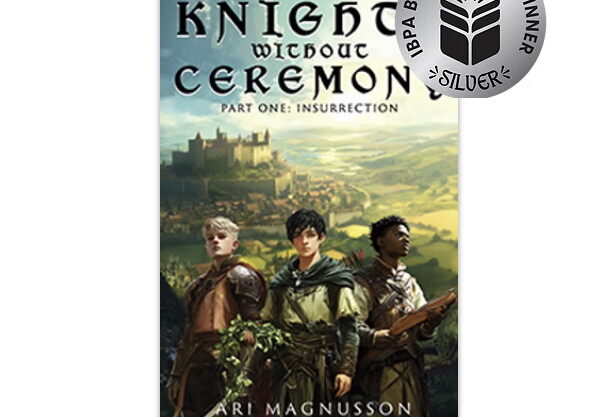
When the 2026 IBPA Book Awards for Middle Grade Fiction were announced, I noted that all three books (mine included) had boy protagonists. The other two were written by women. After reading the other books, I noted something different about these boy characters compared to the ones in my book. How the plots unfold for the boy characters in the other two books illustrates what could be part of the problem of masculine identity.

First, let me say that the other award winners, Armando and the Amazing Animal Race by Diana Schaffter, and The Watchwood Inheritance by Ann Huchingson, are wonderful books. As I told my wife after reading the first few pages of Armando, that book was going to get the IBPA gold medal. It was wonderfully written and perfect for the age group. Watchwood was also wonderfully written but, in my humble opinion, it felt like it was written for an older audience (a remark I’ve heard more than once about my own book). Ms. Huchingson writes brilliantly, and as I told her when we sat together at the IBPA awards ceremony, I thought her story ideas were incredible and would really resonate with an older target audience. Both Ms. Huchingson’s writing style and her paranormal ideas niche reminded me of Lisa Genova and her medical issue books.

Now back to masculine identity, and I’m going to try to avoid any spoilers. In Armando, the boy protagonist, Armando, enters a race with his grandmother to be the first ones to photograph animals on the verge of extinction. The goal of the race is to raise awareness about the plight of these animals. But Armando does not succeed on his own. His friend Jinny, a girl, helps him along the way. If not for the research clues that Jinny provided, Armando would not have succeeded.

In Watchwood, the boy protagonist Peter learns that he has a special inheritance (I got goosebumps as I wrote that; Ann, if you are reading this, you really have a special talent in crafting these stories). Peter had to figure out a mystery related to this inheritance. However, Peter didn’t figure it out. His friend Hadley, a girl, did the research and figured out what Peter needed to do. Without the help of Hadley, Peter would not have succeeded. In both Armando and Watchwood, the boys were dependent on girls for their success.

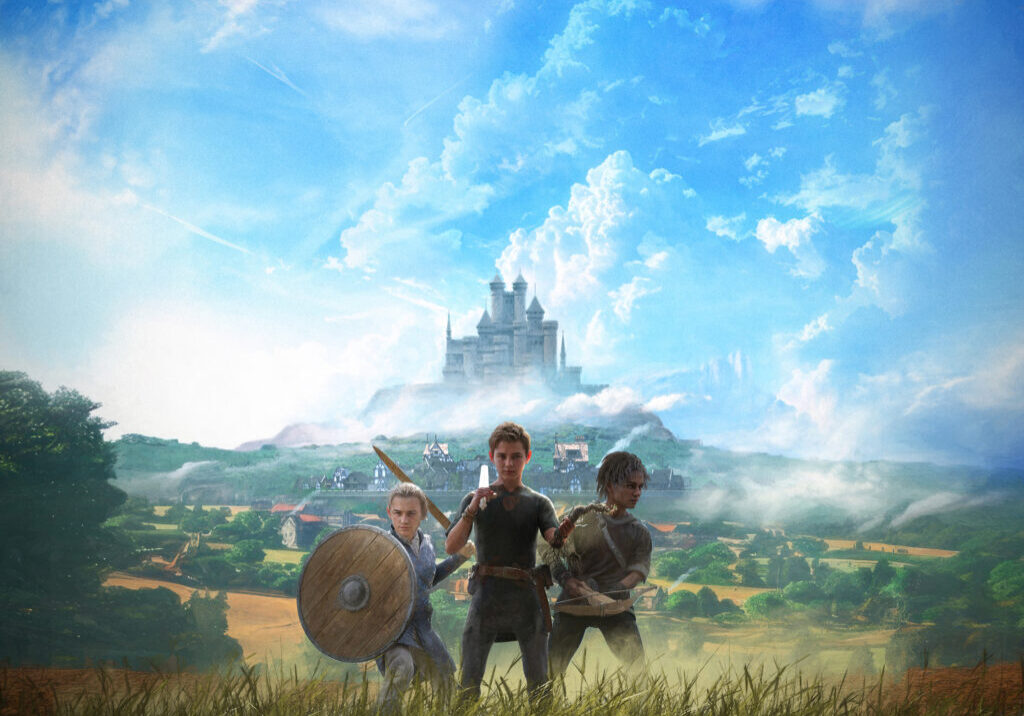
In Knights Without Ceremony, I took a different approach. I decided to remove almost all the female characters. There is only one, the mother of a boy, who plays a minor role. I made this choice because I wanted the boys who read my book to see boy characters who manage to succeed on their own. The successes of the boy protagonists in my book do not depend on the help of female characters. The boys in my book get into quandaries but manage to get out of them by figuring out their own solutions. The boys see problems in their world and recognize that they have the power to do something about them, all by themselves. That, I think, is what we adults hope for in the boys in our society. We don’t want them to develop into what sociologists are calling the “man-child,” a man who is dependent on others like a child. If we want self-reliant men, we need books that show boys that they can succeed on their own, without help.

When I think about the books I read growing up, the first ones that come to mind are The Wizard of Earthsea, The Hobbit, A Separate Peace, Lord of the Flies, Where the Red Fern Grows, and How to Eat Fried Worms. These are books with boy/male protagonists who make their own decisions and, for better and worse, face the consequences of those decisions. Even in one of my favorite middle grade books with a male and female protagonist, Bridge to Terabithia, the female protagonist is an influence on the male, but the growth that the boy character experiences comes from within himself. He’s not helplessly dependent on the female. Although anecdotal, I should note that of the seven books I just mentioned, five were written by male authors.

As anyone who knows my work on bullying prevention can tell you, I tirelessly champion equality, acceptance, and the scientific fact that gender identity is not binary but falls on a spectrum. I wholly support the idea that all children should be able to find characters in books who are exactly like them, characters in whom they can see themselves. And I believe our society would be much better off with more women in decision making roles, including in the highest offices.

However, in looking at the falling numbers of middle grade boy readers, the concerns of sociologists about Gen Z boys, and the gender imbalance within all stages of the middle grade segment of the book industry, I’m wondering if we—writers, agents, editors, publishers, and bookstore owners—have a problem of our own making, one that we should fix. We highlight banned books, we champion books for readers in marginalized social groups. Why not highlight and champion the ever-decreasing number of books for boys? Sure, a middle grade book written strictly for boys is going to start off with the financial disadvantage of a smaller target market. But while it might not make the best seller list, it might reach a few boys who otherwise would have put books aside in favor of other forms of entertainment. Such a book might succeed in making a few lifelong readers, a goal I know that we all share.

Screenshot

Subscribe

To subscribe to the posts, please enter your email address.
Subscribe

Name*

Leave a Comment


Other Posts by Ari

Screenshot

KWC Won the 2026 IBPA Book Awards – Silver!

Book-Excellence-Awards-Profile-Winner-2-600-x-600

KWC Won the 2026 Book Excellence Award!

Screenshot

A Real-Life Drogue

Knights without Ceremony book cover

KWC Named a Top 100 Notable Book of 2025!

Search the Blog